
From the Source roundup – May 2026
Welcome to this month’s “From the Source” roundup
From the Source is a regular feature on the podcast I make called Source 2 Target. Each week, I summarise the key points from a peer-reviewed article in the world of translation research on the podcast’s LinkedIn. But as not everyone is on the platform or following the show, I share an even shorter version of last month’s articles here. You can also read the full versions on the LinkedIn feed or Instagram.
So here goes!
How can MTPE guidelines be improved to deliver better translation outcomes?
Rico Pérez, C – Re-thinking Machine Translation Post-Editing Guidelines (2024), The Journal of Specialised Translation, 41, 26-47
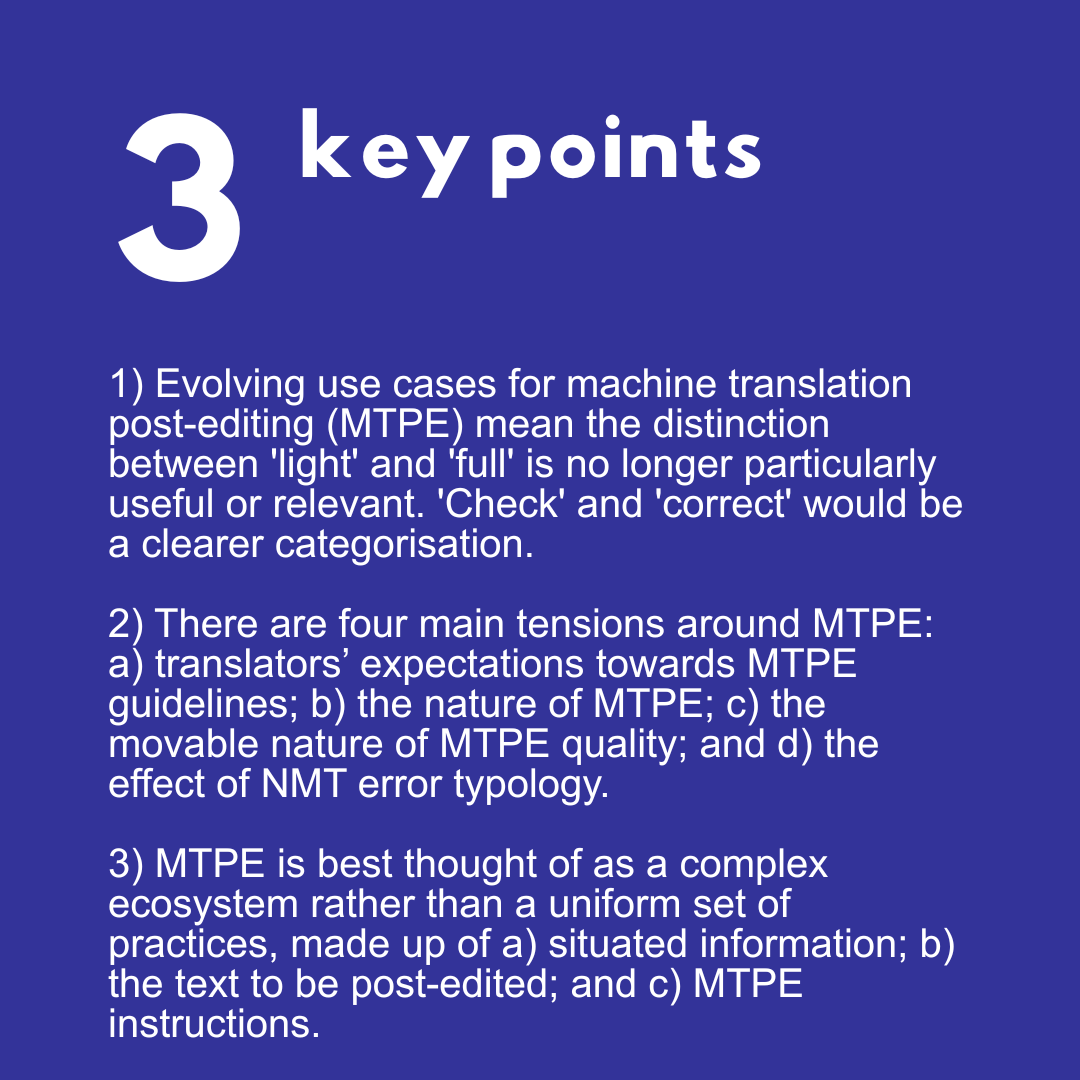

In this piece Rico Pérez argues that machine translation post-editing (MTPE) is not a standardised, one-size-fits-all task. Translators adapt their approach based on multiple interacting factors, yet they are often given unclear or outdated instructions. A key issue is the traditional split between “light” and “full” post-editing: while intended to signal different goals and quality thresholds, these labels have accrued inconsistent interpretations as MT technology has evolved. That inconsistency – alongside other tension factors – can fuel frustration and resistance to MT among professional translators. Rico Pérez proposes a more coherent way to set MTPE criteria by treating MT as an ecosystem of interrelated variables and making those variables explicit in task specifications. Recommendations include providing both general and language-specific guidance and renaming “light/full” as “check/correct” to clarify expectations. The next step is to test the model in a real translation setting.
How do translators handle phrases that can't be translated literally in high-stakes texts?
Li, J; Chen, S & Zhang, Y – “We must work tirelessly to promote …”: Mediating interpersonal commitment to material processes in English translation of Chinese political discourse (2025), PLoS One, 20 (12)
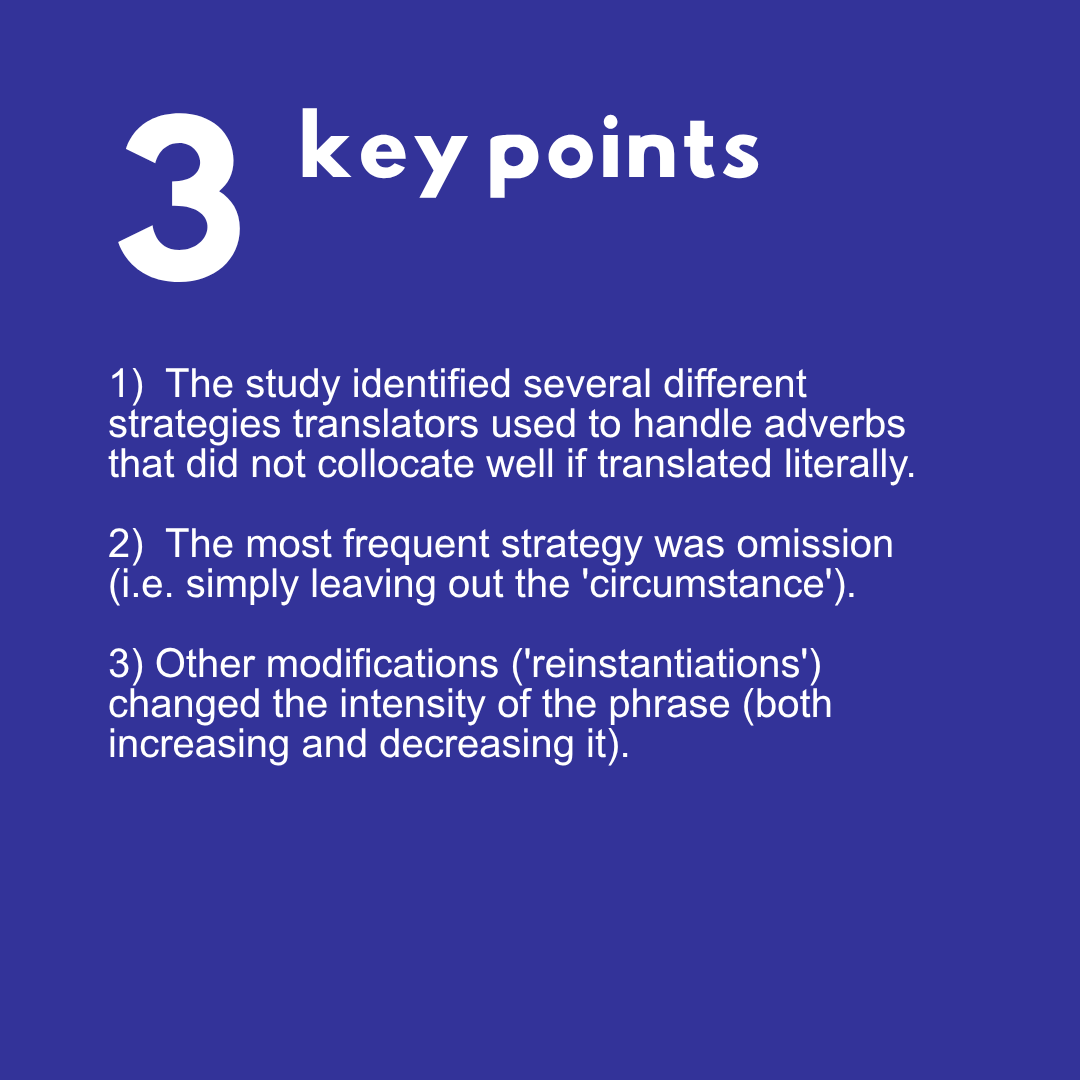
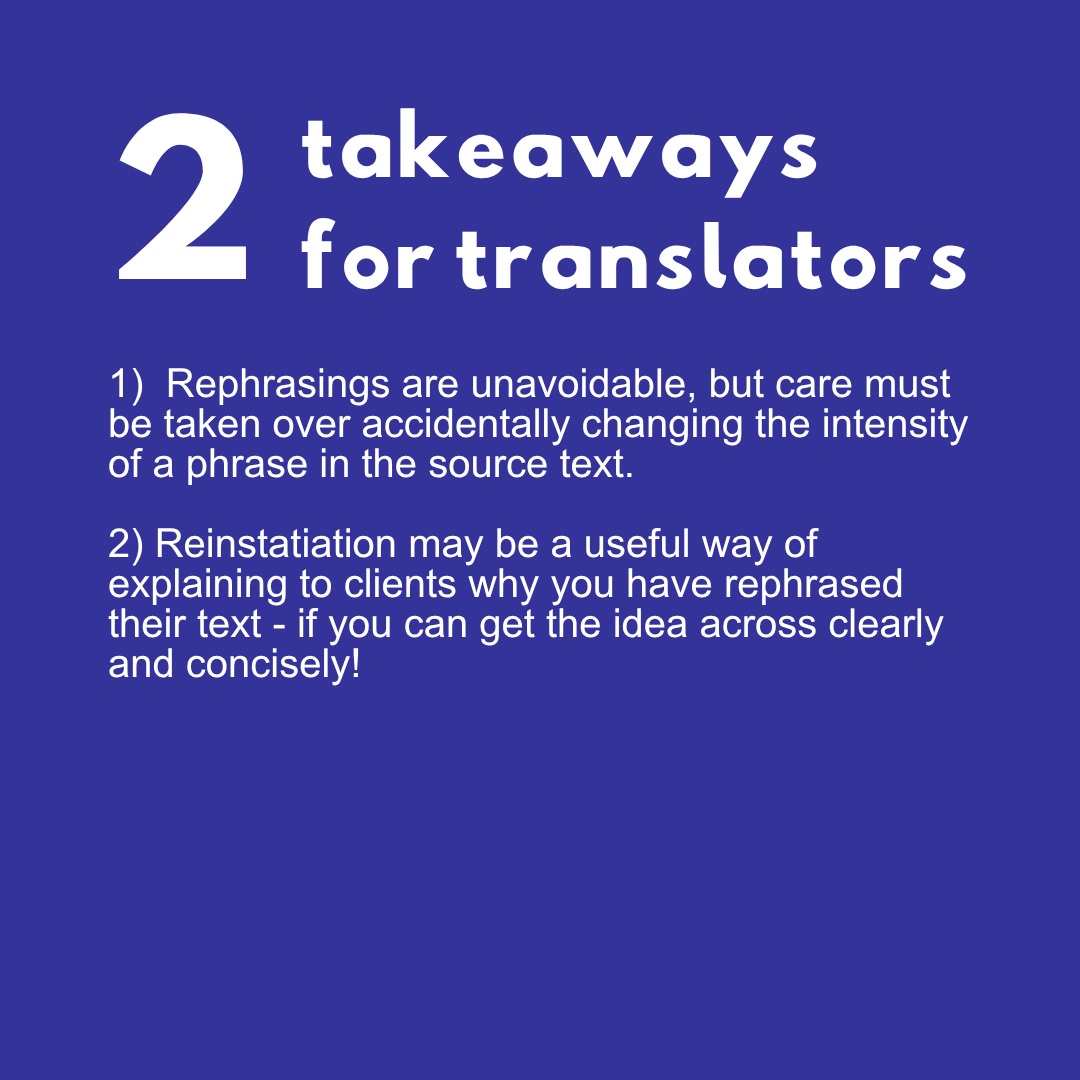
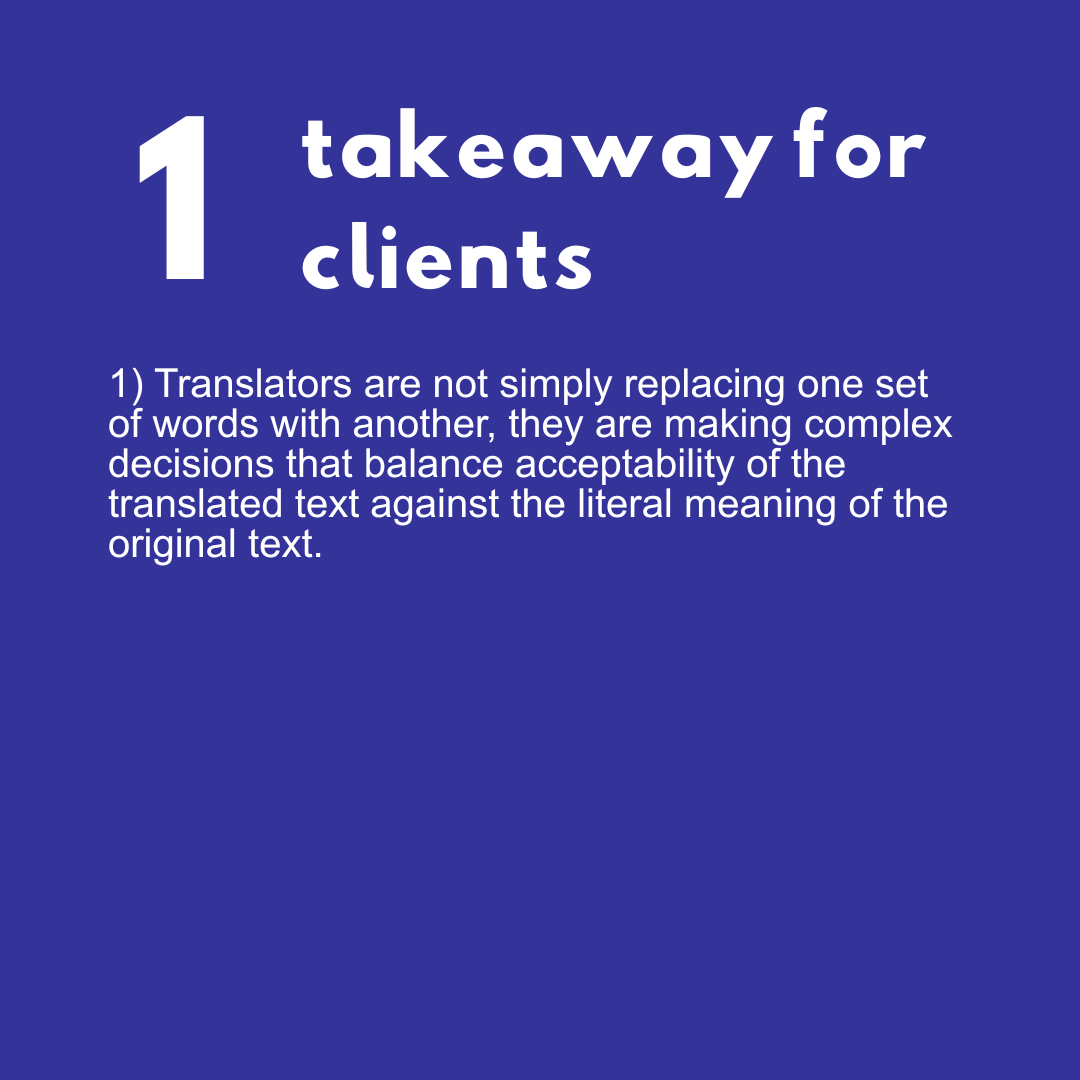
This article summarises a descriptive study of how Chinese–English translators render interpersonal commitment in high-stakes Chinese political discourse. Drawing on systemic functional linguistics, the authors use a translation-as-reinstantiation model, treating the translation as a new instance of the source text that preserves meaning at different levels of specificity (from broad “system” meaning potential to more subjective “reading”). Focusing on “circumstances” (e.g. adverbials such as “actively”), especially when paired with “material processes” (actions such as “pursue”), the study finds that adding circumstances did not change how material-process phrases were translated, contradicting earlier findings about adverbs with mental processes (e.g. “deeply understand”). Translators frequently re-instantiated these Chinese constructions in eight ways, most often by omission, which typically reduces intensity; other strategies maintained or increased intensity via alternative verbs/adjectives. Overall, choices reflect tensions between literal wording, target-language conventions, and potentially ideological emphasis.
Can indirect translation, if done properly, lead to better video game localisation?
Bodišová, L & Velecký, M. – The Paradigm Shift of Indirect Translation in Contemporary Video Game Development and Localization (2024), L10N Journal 1(3), 32–47
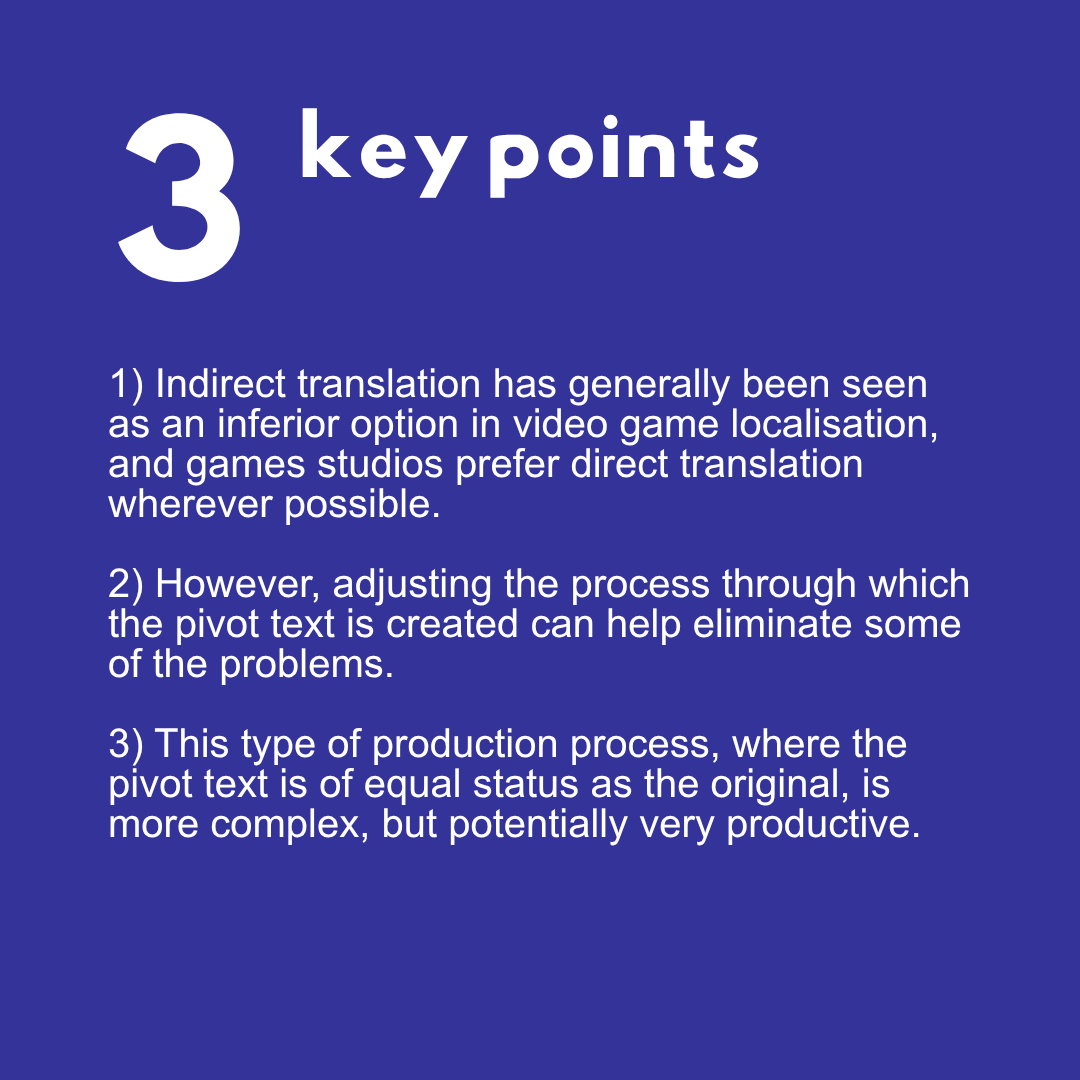
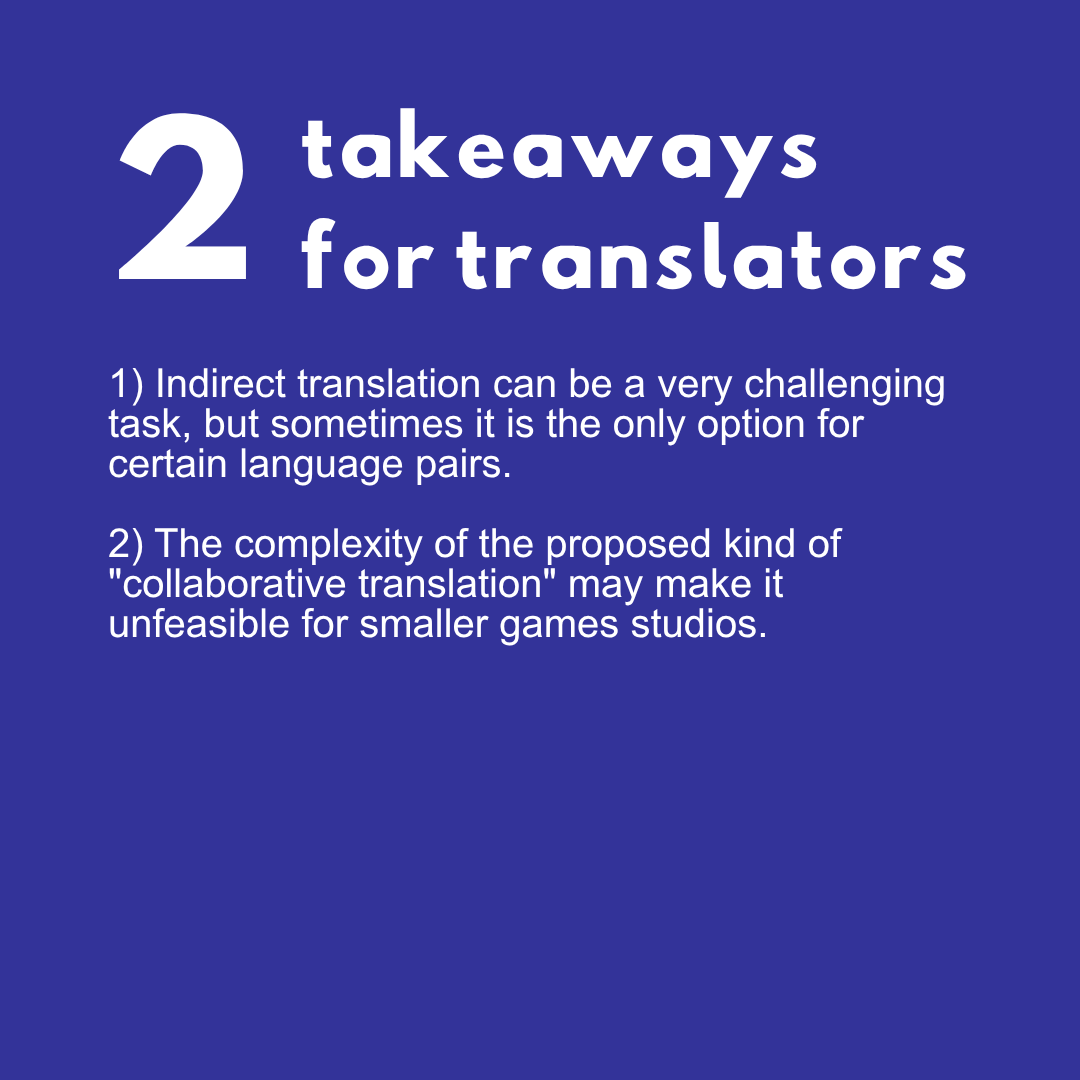

This article looks at indirect (pivot) translation in video game localisation. Indirect translation means translating from an existing translation rather than the original, usually because there are too few translators for a given language pair. It can be the only viable route, but each extra step increases the risk of losing detail and cultural nuance as the text moves further from the source language and culture. This is particularly tricky in games, where meaning is culturally embedded and text is often handled in coded strings. Bodišová and Velecký focus on Japanese-to-Slovak localisation and note that indirect translation is often viewed as inferior. However, using the translation process used for the game Final Fantasy XVI, they highlight a production model where the Japanese original and English pivot were treated as equally important and could influence each other, integrating translation into development rather than leaving it to post-production. They argue this shift in the pivot’s status can reduce the drawbacks of indirect translation, though it requires careful management.
Are audiovisual translation preferences changing (in Poland)?
Flis, G. & Szarkowska, A. – Voice-over country? Okay, Boomer. How young viewers are disrupting the AVT landscape in Poland? (2024), The Journal of Specialised Translation, 42
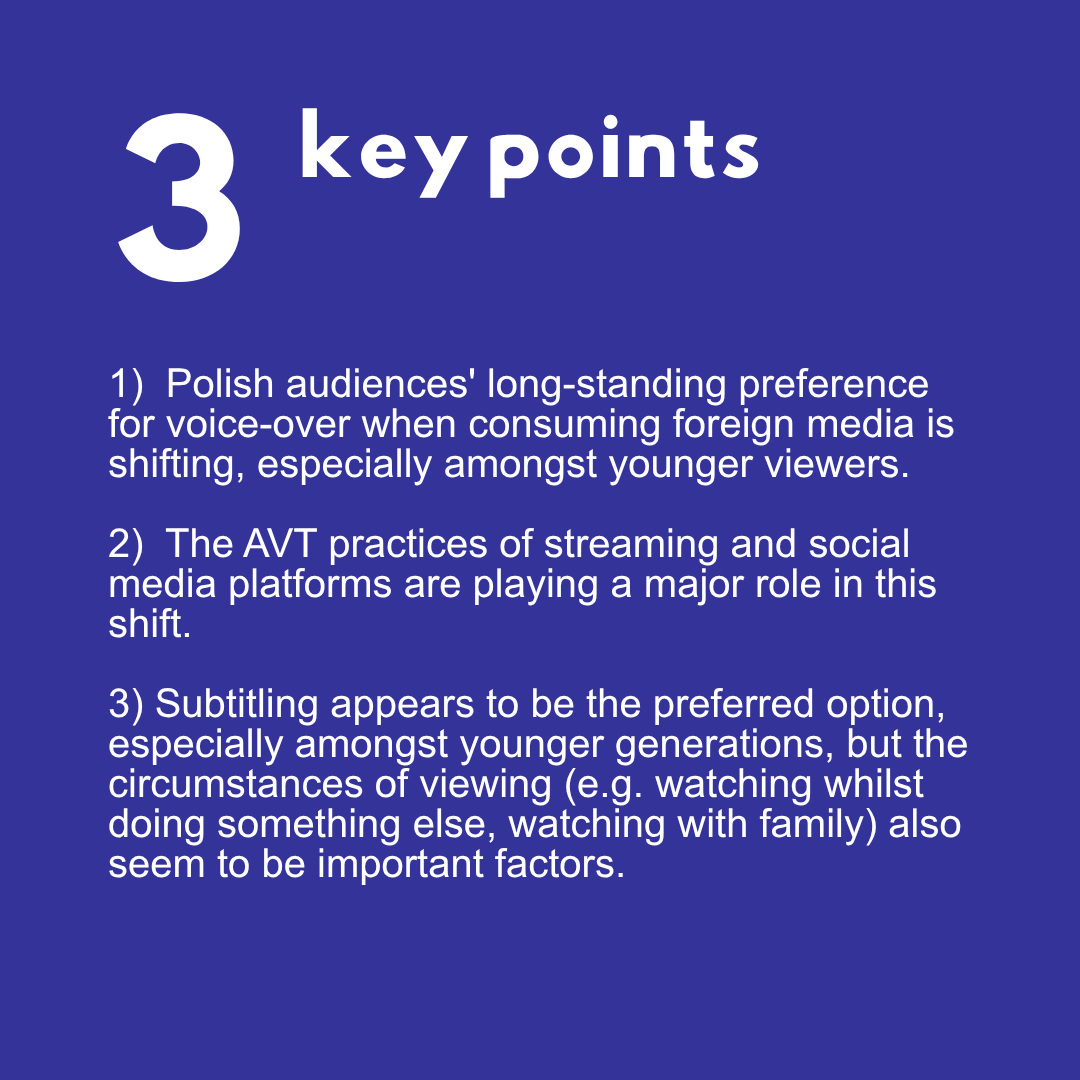
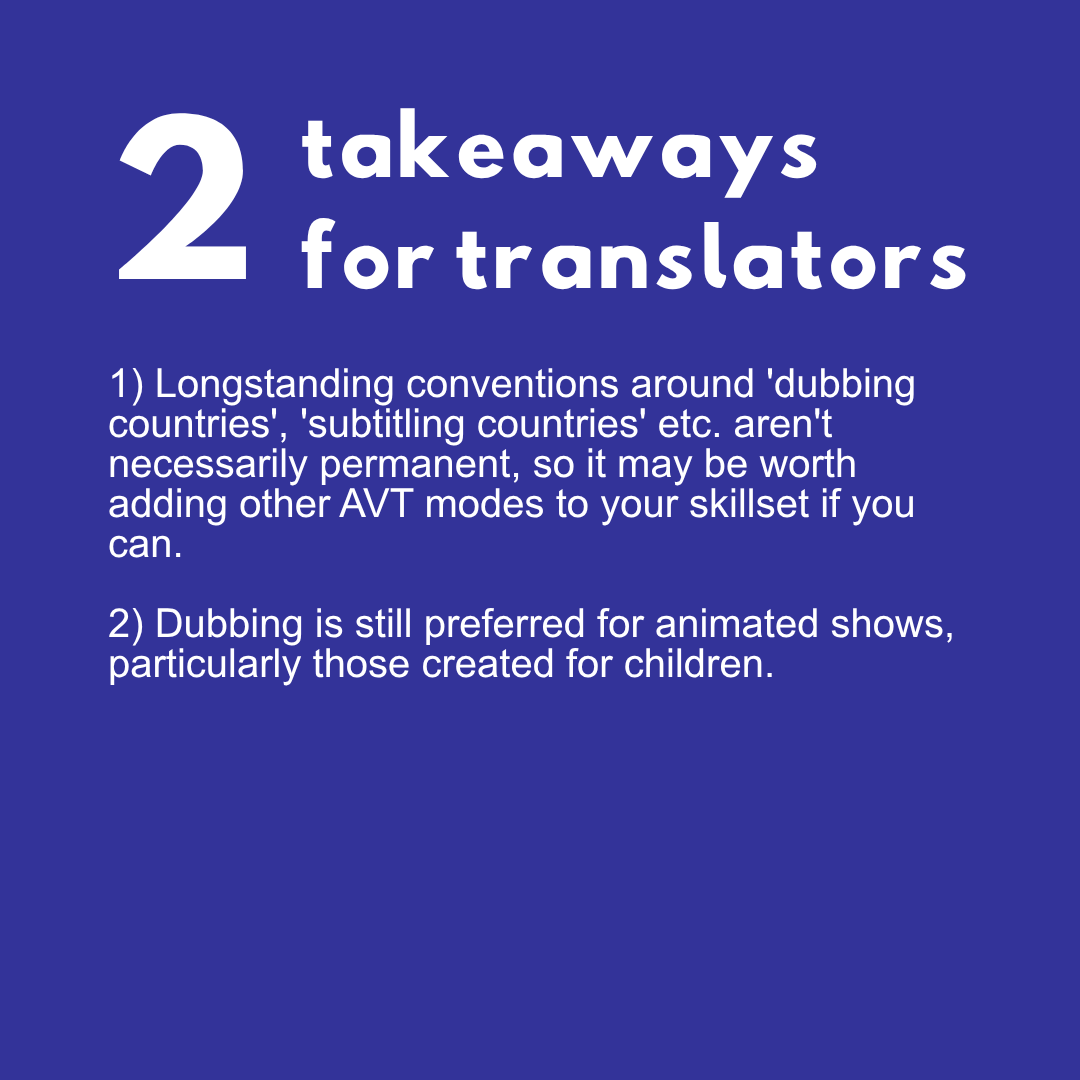

This article discusses how audiovisual translation (AVT) – dubbing, subtitling and voiceover – is changing in Poland. Although Poland has traditionally been labelled a voiceover country, Flis and Szarkowska argue that preferences are shifting, with age emerging as a key factor: Gen Z viewers (18–26) strongly favour subtitles, while dubbing remains common for children’s animation. The authors link this change to streaming platforms and social media viewing habits, including watching on phones (often on mute) with subtitles. Their survey also shows that viewing context matters: voiceover can be preferred for hands-busy activities (e.g. cleaning), while subtitling depends on reading speed and can be harder for young children or tiring for some older viewers. Rather than a single “best” mode, the authors suggest that offering audiences a choice is most likely to maximise engagement, despite the additional cost.